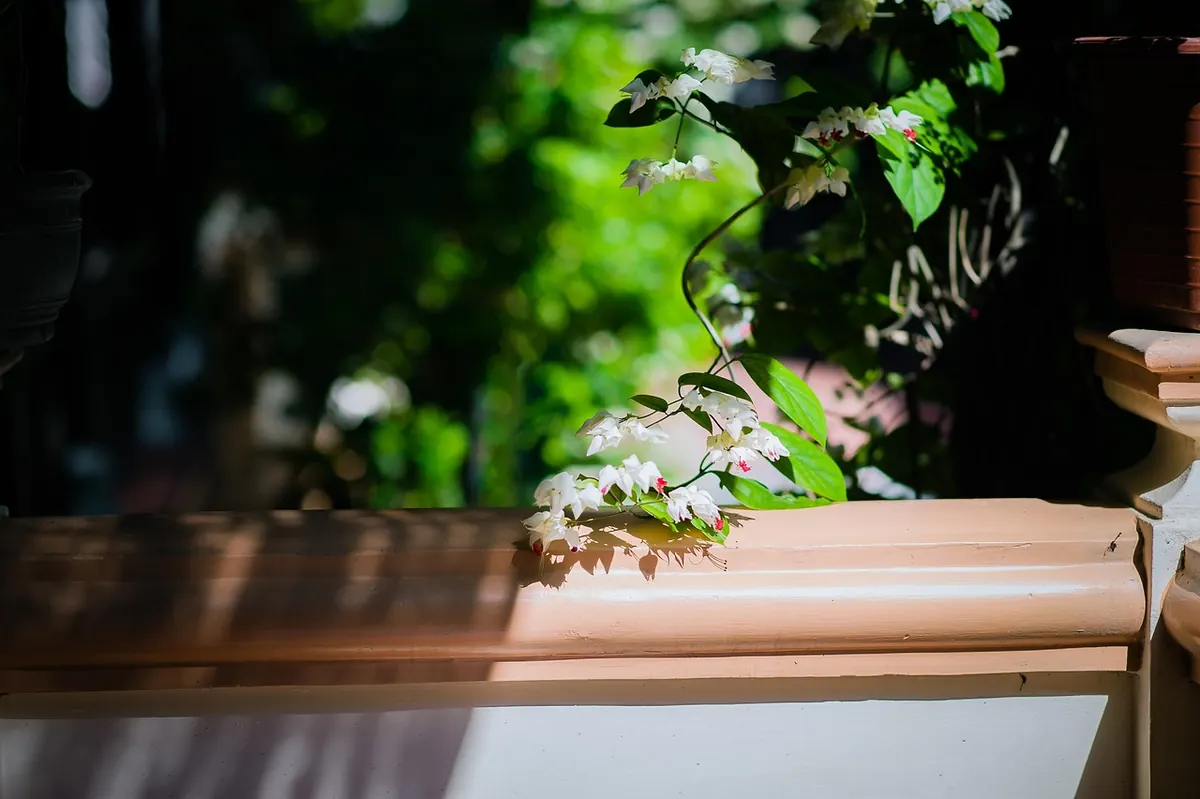
Spring shows up on a porch before it shows up anywhere else. One afternoon the boards are warm underfoot, the light has shifted, and you notice the winter's worth of grit settled into the corners. That first good weekend is the moment to deal with it — not with a full renovation, but with a sensible sequence: clean, repair, plant, light. Work in that order and each step makes the next one easier. Wash the railings before you hang anything on them. Move the furniture before you sweep behind it. And save the lighting for last, so you finish the weekend sitting in the glow of a job you can actually see.
Clean From the Ceiling Down, Not the Floor Up
Start with a long-handled brush and knock down the cobwebs, dust and papery wasp nests from the ceiling, corners and light fixtures. Whatever falls will land on the floor, which you haven't cleaned yet — that's the point of the direction.
Then wash the ceiling and walls with a mild detergent and warm water, working in small sections and rinsing as you go. On painted beadboard or tongue-and-groove, don't soak the surface; a damp cloth wrung out well is enough. Pay attention to the underside of the roof overhang, where dust and pollen collect and stay out of sight until someone looks up.
Railings and floors come next. Scrub the top rail and balusters with a stiff brush, then the floor, using a degreaser near the grill if cooking splatter has darkened the boards. If the porch has screens, vacuum them with a brush attachment on both sides, then wipe the frames and dig the grit out of the window tracks with an old toothbrush or a thin putty knife.
What to carry out in one trip
- A stiff deck brush and a softer brush for painted surfaces
- A bucket, mild detergent and a spray bottle of diluted vinegar for railings
- Several microfiber cloths and one dry towel for immediate drying
- A vacuum with a brush attachment for screens and cushions
- A hose with a spray nozzle, or a watering can if the porch is far from a spigot
Furniture is the last cleaning job, and often the most satisfying. Wipe down metal and wood frames, then check the cushion covers against their care labels. Most zip off and wash cold; some should be hand-washed and dried flat in the shade. Look closely for the small black speckles of mildew on cushions that spent winter in a shed — those usually need a proper wash rather than a spot rub. Let everything dry completely in the sun before it goes back out, and use the drying time to sweep the empty floor.
Fix the Small Things Before You Decorate
With the porch empty, faults are easy to spot. Walk the floor in soft shoes and listen for squeaks, then tighten or replace loose boards. Push on the railings — really push. A railing that moves more than a fraction under your weight needs new fasteners or a new post, not a decorative cushion propped against it.
Sand rust spots on metal furniture down to bare metal, prime them and touch up the paint, or the rust will be back before summer. Teak and other untreated woods benefit from a light sanding and a fresh coat of oil after cleaning. Hinges get a drop of lubricant, and anything that wobbles gets tightened while you still have the tools out.
Check the outdoor outlets and the fixtures you'll be relying on all season. If a switch or outlet feels warm, buzzes, or shows scorch marks or cracking, stop using it and have a licensed electrician look at it rather than taping it up and hoping. It's a small job for a professional and a frustrating one to discover halfway through a dinner outside.
Plant for the Porch's Own Light and Wind
A porch is not a garden bed. It has a roof, which means less rain reaching the pots, and often less sun than the yard beyond it. Before you buy anything, watch the space at three points in the day and note where the light actually lands. A corner that looks bright at noon may be in deep shade by four.
Choose containers with drainage holes and set them on pot feet or bricks so water escapes and air moves beneath. Group pots in odd numbers and vary the heights — a tall evergreen shrub, a mid-height flowering plant, and something that spills over the rim all in one cluster reads better than five pots lined up like fence posts. Repeat the same plant in two or three pots to tie the space together rather than collecting one of everything.
For shaded porches, ferns, heuchera, begonias and coleus hold up well and don't sulk without direct sun. Where the light is strong, geraniums, verbena, rosemary, lavender and most herbs thrive. Put a pot of herbs within arm's reach of the door so snipping a few stems for dinner doesn't turn into an expedition, and keep a small watering can nearby — covered porches dry out slowly but unevenly, and a pot tucked into the corner is the one you'll forget.
Hold off on tender annuals until the risk of frost has passed in your area; your local extension service or garden center can tell you the typical last frost date, and a week of patience is cheaper than replacing everything.
Layer the Lighting Instead of Hanging One String
A single strand of lights across the ceiling is a start, not a scheme. Good porch lighting comes in layers: something general for seeing your plate, something focused for reading or for the steps, and something low and warm for atmosphere.
For the general layer, use outdoor-rated fixtures with warm bulbs — around 2700K if the packaging lists a color temperature, which reads closer to candlelight than the blue-white of a workshop bulb. String lights work best when they're given a proper line to follow: screw small hooks into the beams or run a tension wire between two points and attach the strand to that, so it hangs with a gentle, even dip instead of a sag in the middle. Keep the bulbs off eye level where people sit.
For the accent layer, small lanterns on the table, a battery candle in a glass hurricane, or a couple of low path lights at the steps will do more than doubling the overhead light. Put anything plugged in on a timer so the porch is lit when you come home and dark when you go to bed. Outdoor-rated cords and fixtures are not optional, and no cord should cross a spot where water pools. Tape down what crosses a walkway, or route it along the wall instead.
Your Weekend, Laid Out
- Saturday morning: Empty the porch, sweep the ceiling and walls, wash them, then scrub floors and railings. Let everything dry.
- Saturday afternoon: Wash cushion covers and wipe down furniture frames. Tighten, sand, prime and oil whatever needed it.
- Sunday morning: Shop for plants with your light notes in hand, pot them up, water thoroughly and arrange them in groups.
- Sunday afternoon: Hang the lights, set the timers, return the furniture, and put out the small things — a tray, a throw, a candle.
Keep It a Ten-Minute Habit
A refreshed porch holds its shape if you give it a few minutes a week. Sweep on Sunday, fluff the cushions, pinch off spent flowers, and wipe the table after anything sticky. Once a month, check the string lights for a bulb that's out and look at the railing the way you did on that first weekend — with a good push. The big clean is a once-a-year job. The small upkeep is what makes it feel like a room you actually use, from the first warm afternoon until the evenings get too cool to sit out.
Photo: hongquan7749 / Pixabay