A Mediterranean border is less a plant list than a way of gardening: sharp drainage, full sun, gravel underfoot, and plants that prefer dry roots to pampering. Beside a terrace, it gives scent, movement, and structure without a summer of hose-dragging. Build the conditions first, choose plants that suit them, and leave enough bare gravel for the border to breathe.
Begin with the site, not the plant catalogue
Walk the area at three times of day before you buy anything. Note where sun sits longest, where wind funnels between buildings, and where rainwater collects. Most Mediterranean plants want direct sun for at least half the day; if your spot is shaded for much of it, choose shade-tolerant herbs or reconsider the position.
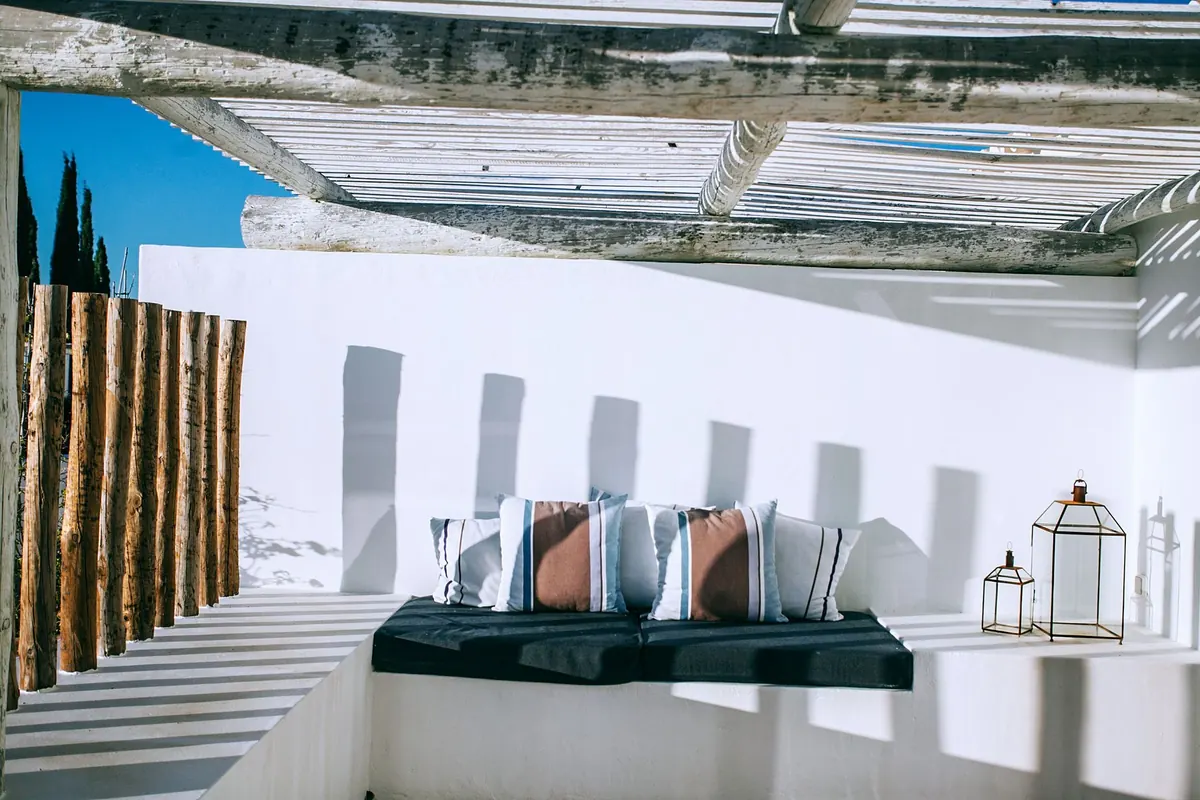
Stand inside the outdoor living area and look out. The border should frame the view, not block it. Mark the edge with a hose or a line of sand, then check the depth. A border of 1.2m can hold a row of shrubs and herbs; if you want a path, taller structure, or room for plants to spread, make it wider. Leave gaps for access—you will need to prune, weed, and reach the back.
Think about how the border meets the terrace. A crisp gravel margin keeps plants from flopping onto paving and makes the transition feel intentional. If the border wraps a seating area, keep the tallest plants at the back or at the ends so they do not close in the view.
Also notice the microclimate next to walls and paving. A south-facing wall stores heat and creates a dry, warm pocket that suits rosemary, cistus, and lavender, while an exposed corner may batter taller plants. Paving reflects light and heat too, so the front edge of the border can be a tougher spot than the back. Use these differences rather than fighting them.
Fix drainage before you plant
Mediterranean plants often die in winter wet, not summer drought. Test the soil with a simple hole: dig it about 30cm deep, fill it with water, and see how long it takes to drain. If water is still sitting there a day later, improve drainage before planting.
On heavy clay, the easiest fix is a raised border 20–30cm above grade, filled with gritty soil. On better ground, fork coarse grit and well-rotted compost into the top 20–30cm. Do not over-enrich the soil; rich conditions make lavender floppy and short-lived. A lean, open soil suits the palette better.
- Clear weeds and roots from the border.
- Dig a test hole and check drainage.
- Spread 5–8cm of coarse grit over the surface.
- Fork it through the top layer with a little compost.
- Let the bed settle, then water it to see where puddles form.
If the border sits against a wall, remember that the soil there will be drier than the open ground. That suits rosemary and cistus, but new plants still need water until they root. Where drainage is especially poor, a simple French drain or a shallow soakaway filled with gravel can move water away from the planting area before it becomes a problem.
Build the planting in layers
A convincing Mediterranean border has evergreen structure, seasonal scent, and a few gaps. Choose plants by the role they play rather than by colour alone.
Evergreen bones
Start with shrubs that hold their shape in winter: rosemary, lavender, cistus, phlomis, santolina, and teucrium. Check the mature spread on the label—rosemary can become a wide shrub, and lavender soon sprawls beyond its allotted space. Place these where their form matters most, perhaps against a warm wall or at the end of a terrace.
Herbs and perennials for scent and movement
Add salvias, oregano, thyme, and fennel for scent and airy movement. Repeat three or five of the same plant rather than collecting one of everything; repetition makes a border look deliberate. Use herbs you will actually pick—oregano and thyme are forgiving, and rosemary earns its place twice over.
Groundcover and bulbs for the gaps
Fill the spaces between shrubs with low spreaders such as helianthemum, sedum, and creeping thyme. Bulbs are useful too: alliums and Iris unguicularis bring early interest and then disappear. Keep some open gravel. A border that is packed solid loses the Mediterranean look and becomes harder to maintain.
Place plants before you dig
Set the pots out in their final positions and leave them for a day. Work from the terrace side outward, checking the view from where you will actually sit. Space plants for their mature size, not the size they are in the pot. A little bare gravel between them is not a mistake; it is part of the design.
Group plants in odd numbers, vary the rhythm, and keep taller shrubs at the back or at the ends of the border. Leave a clear margin of gravel along the edge so plants do not flop over the terrace. Before digging, move anything that feels crowded. It is much easier to shift a pot than a rooted shrub.
Think about winter shape as well as summer flower. Lavender and santolina keep a grey-green outline, while phlomis and cistus give larger leaves and seed heads. A border that looks good in January will feel better from the terrace in July.
Plant into gravel, not mud
Water each pot thoroughly before planting. Dig a hole wider than the root ball, set the plant at the same depth it was growing, and backfill with the gritty soil. Firm gently, then water again to settle the soil. Finish with a 5–8cm layer of gravel around the plant, keeping it clear of the stems. Gravel suppresses weeds, keeps the collar dry, and makes the border look finished from the first day.
Plant in spring or early autumn, when the soil is warm but the sun is not fierce. Avoid planting in the middle of a heatwave; even drought-tolerant plants need a chance to root. If you must plant in summer, shade the new plant for a week and water it regularly until it settles.
Watering and aftercare
New plants need help even if they are drought-tolerant. Water deeply at planting, then soak the root ball every few days during the first dry spell. Water in the morning or evening, and aim at the soil rather than the leaves. A hose left to trickle is better than a quick sprinkle, because it reaches the roots and encourages them downward.
By the second summer, most established Mediterranean plants should need water only in prolonged drought. Lavender, rosemary, thyme, and cistus prefer a dry root zone; constant moisture makes them soft and short-lived. If you are unsure, push a finger into the gravel and check below the surface. Water when the soil is dry a few centimetres down, not on a fixed schedule.
Wet roots in winter and rich soil do more harm to a Mediterranean border than a dry August.
Maintenance and a simple plan
A Mediterranean border is low maintenance, not no maintenance. The main jobs are pruning, weeding, and topping up gravel. Trim lavender and santolina after flowering, but do not cut into old, leafless wood. Shear lightly to keep the bushes compact and open in the middle. Rosemary can be clipped after flowering to keep its shape, and phlomis is best cut back in spring once new growth appears.
Remove weeds before they seed, especially in the gravel margin. A hoe or hand fork is usually enough. Top up the gravel every year or two to keep the mulch layer intact; this also hides small weeds and keeps the border looking crisp. Do not mulch with rich compost, which holds moisture and encourages soft growth. If plants need a boost, a light dressing of garden compost in spring is enough.
Replace short-lived plants when they become leggy. Lavender often declines after four or five years, and replacing a few plants is easier than trying to renovate an old bush. Keep a few spare pots or take cuttings so the border can be refreshed without a full replant.
A simple plan for a sunny terrace edge
For a border about 3m long and 1.2m deep, start with three evergreen shrubs: a rosemary at one end, a lavender in the middle, and a cistus or phlomis at the other. Add three clumps of salvia and three of oregano in front, then fill the remaining gaps with thyme, helianthemum, and a scatter of alliums. Leave a 30cm strip of gravel along the terrace edge and keep taller plants at the back.
Adjust the plan to the view. If the border is seen from one side, place the tallest plants at the back; if it is seen from both sides, keep the tallest in the middle. Repeat plants in groups of three or five so the border reads as a composition rather than a collection. The best Mediterranean borders look generous but not crowded, with enough bare gravel to show the shape of each plant.
Photo: MabelAmber / Pixabay